


Effective SEO Techniques to Drive More Customers to Your Online Jewelry Business for Increased Sales and Visibility
Driving more customers to an online jewelry business relies heavily on effective SEO techniques tailored to the industry. Optimizing product pages, using targeted keywords, and enhancing visual content are essential strategies that increase search engine visibility and attract the right audience.

Understanding how search engines rank content allows jewelry sellers to create a website that not only looks appealing but also performs well in search results. Combining technical SEO improvements with quality content marketing helps build credibility and trust with potential customers.
Additionally, focusing on local SEO can bring in nearby buyers looking for unique pieces. Tracking SEO efforts regularly ensures that strategies stay relevant and continue to deliver traffic and sales.
Key Takeaways
- Targeted keywords and optimized pages improve search visibility.
- Quality content and technical SEO build trust and credibility.
- Local SEO and performance tracking help maintain steady traffic.
Understanding SEO for Online Jewelry Businesses
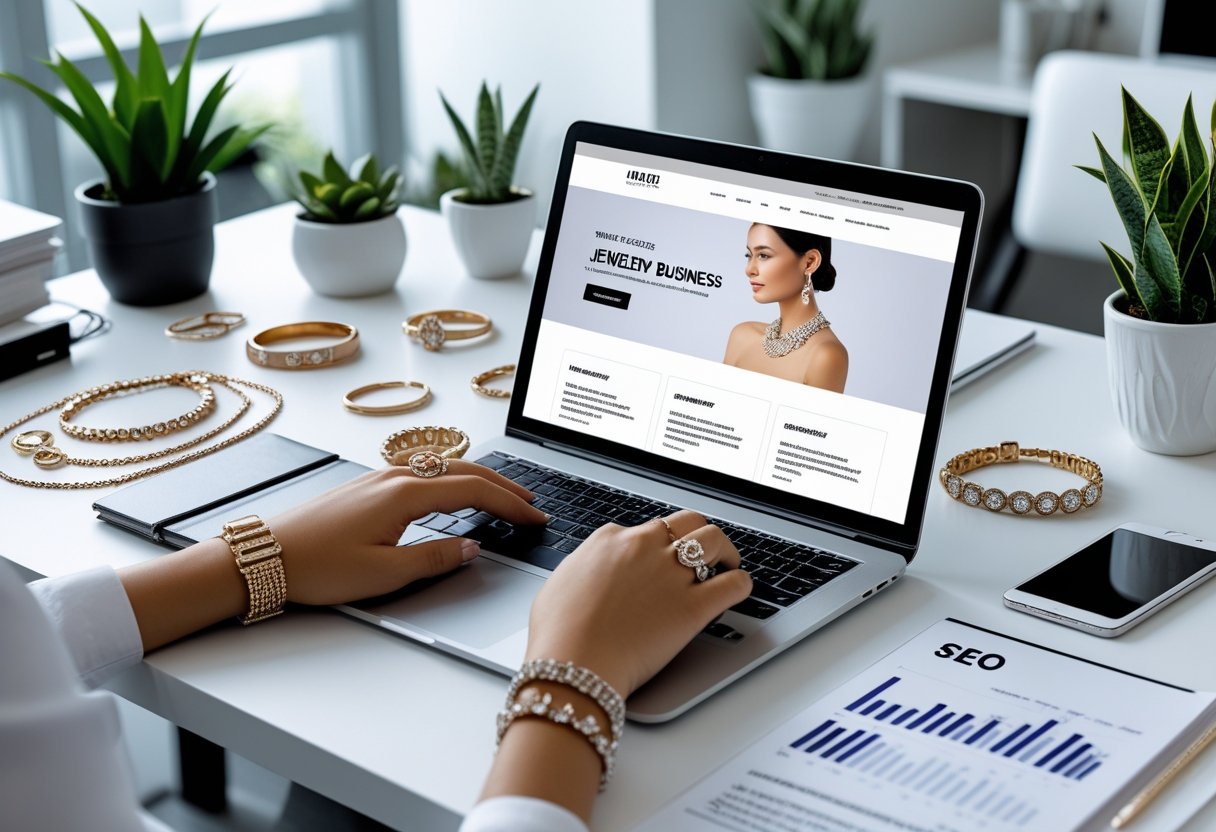
SEO helps online jewelry businesses gain visibility, attract targeted traffic, and convert visitors into customers. It requires specific strategies that address both e-commerce fundamentals and the unique aspects of selling jewelry online.
The Importance of SEO in E-Commerce
SEO is critical for e-commerce because it positions businesses on search engine results pages (SERPs). Higher rankings improve visibility and increase the potential for organic traffic without ongoing advertising costs.
For jewelry stores, SEO directs potential buyers searching for specific items like “engagement rings” or “custom necklaces.” It enhances product discoverability by optimizing product titles, descriptions, and images with relevant keywords.
Local SEO also plays a role, especially for jewelers offering in-store pickup or custom services. Proper SEO helps build trust and encourages customers to choose the seller over competitors.
How SEO Impacts Online Jewelry Sales
SEO drives qualified traffic by matching user intent with specific search queries. People searching for jewelry often have a purchase mindset, making SEO an effective tool for conversion.
Optimized product pages increase click-through rates and improve user experience. Elements like fast-loading pages, clear calls-to-action, and high-quality images help reduce bounce rates and encourage purchases.
SEO also supports content marketing strategies, such as blogs about jewelry care or style tips, which establish authority and keep visitors engaged longer. This builds brand loyalty and encourages repeat sales.
Challenges Unique to the Jewelry Niche
The jewelry niche faces intense competition and high-cost keywords, increasing the difficulty of achieving top rankings. Many jewelers must compete against large brands with significant SEO budgets.
Product differentiation matters significantly. Jewelry relies heavily on visual appeal and craftsmanship, so SEO efforts must balance keyword usage with high-quality imagery and detailed descriptions to communicate value.
Additionally, duplicate content can be an issue, especially when the same manufacturer supplies multiple retailers. SEO strategies must include unique product descriptions and user reviews to stand out.
Keyword Research Strategies for Jewelry Products

Effective keyword research focuses on identifying terms that customers use when searching for jewelry, analyzing competitors’ successful keywords, and targeting specific, less competitive search phrases. This approach helps increase visibility and attracts relevant traffic.
Identifying High-Converting Search Terms
High-converting search terms are those that lead to purchases rather than just clicks. To find these, tools like Google Keyword Planner and Ahrefs can be used to track keywords with strong buyer intent, such as “engagement rings under $1000” or “custom gold bracelets.”
It’s important to prioritize terms that reflect what customers are ready to buy. Keywords including product attributes—material, style, occasion—improve targeting. For example, “sterling silver necklace for women” is more likely to convert than a broad term like “jewelry.”
Analyzing Competitor Keywords
Studying competitor keywords reveals which terms drive their traffic and sales. Tools like SEMrush or SpyFu allow users to input competitors’ domains and view the keywords bringing them visibility.
This analysis highlights gaps and opportunities. If competitors rank for “vintage diamond earrings” but you do not, it may be worth incorporating that term. Focus on competitors with similar product lines and customer profiles for the most relevant insights.
Targeting Long-Tail Jewelry Queries
Long-tail keywords are specific, multi-word phrases that often indicate a more decisive buyer. Examples include “handmade pearl earrings for weddings” or “men’s titanium wedding bands size 10.”
These queries usually have lower search volume but less competition, increasing the chance to rank higher. They also match niche customer needs more precisely. Incorporating long-tail keywords into product descriptions and blog content can improve organic reach effectively.
On-Page SEO Optimization
Effective on-page SEO involves carefully crafting product titles, meta tags, and category page structures to improve search engine visibility and user experience. Focused keyword placement and clear organization are key to guiding both customers and search engines.
Optimizing Jewelry Product Titles and Descriptions
Product titles should include primary keywords such as style, material, and specific jewelry type. For example, “Sterling Silver Emerald Pendant Necklace” communicates clear attributes and search intent.
Descriptions must balance keyword usage with readability. They should highlight unique selling points like craftsmanship or design details while naturally integrating relevant search terms.
Use bullet points to outline features like metal type, stone quality, size, and care instructions. This format improves scanning and enhances SEO by reinforcing important keywords without keyword stuffing.
Creating Compelling Meta Tags for Jewelry Pages
Meta titles need to be concise, ideally under 60 characters, while incorporating the main keyword and a selling point, e.g., “Elegant Gold Wedding Bands | Custom Designs.”
Meta descriptions should be under 160 characters and provide a clear value proposition. They should encourage clicks by summarizing benefits and including a call to action when possible.
Both meta titles and descriptions must be unique for each page to avoid SEO penalties and to maintain relevance for different product or category searches.
Structuring Jewelry Category Pages for SEO
Category pages should be organized logically, grouping products by type, material, or occasion, such as “Engagement Rings” or “Men’s Leather Bracelets.”
Include an SEO-friendly introductory paragraph with keywords targeting the category’s theme. This content supports search engines in understanding the page’s focus.
Use internal linking within categories to connect related items and guide users deeper. Pagination and filters should be SEO-optimized to avoid duplicate content issues and improve crawl efficiency.
Enhancing Visual Content for Organic Traffic
Visual content can significantly improve search rankings and user engagement for an online jewelry business. Properly optimized images and compelling videos are essential to attract and retain visitors.
Image Optimization for Jewelry Photography
High-quality images with fast load times boost SEO and user experience. Each image should have a descriptive filename and include relevant keywords, such as “14k-gold-diamond-ring.jpg.”
Alt text is critical for accessibility and search engines. It must clearly describe the jewelry piece, for example, “rose gold engagement ring with a solitaire diamond.”
Use image compression tools to reduce file sizes without sacrificing detail. This helps pages load quickly, lowering bounce rates.
Structured data (schema markup) for product images can also improve visibility in rich search results.
Video Content to Showcase Jewelry Collections
Videos increase time spent on site and improve rankings. Short, well-edited clips that display jewelry details from multiple angles add value for buyers.
Including keyword-optimized titles, descriptions, and tags helps videos rank on platforms like YouTube and Google. For example, “How to style gold hoop earrings” as a video title.
Embedding videos on product pages can enhance engagement and provide clarity on size and design. Subtitles improve accessibility and aid SEO.
Videos should load smoothly on both desktop and mobile devices to avoid user frustration.
Technical SEO Best Practices
Optimizing a jewelry website’s technical foundation improves search rankings and user experience. This involves enhancing site speed, ensuring mobile compatibility, and using structured data for better product presentation in search results.
Improving Website Speed and Mobile Responsiveness
Slow-loading pages increase bounce rates and reduce conversions. Compressing images without losing quality is essential for quick load times, especially for jewelry sites with rich visuals.
Minimizing JavaScript and CSS files and using browser caching also enhance performance. A responsive design adapts layouts to different screen sizes, providing a seamless shopping experience on phones and tablets.
Google prioritizes mobile-first indexing, so testing mobile usability with Google’s tools helps identify and fix issues. Mobile-optimized sites encourage longer visits and improve rankings.
Implementing Structured Data for Products
Structured data helps search engines understand product details like price, availability, and reviews. Using schema.org markup specifically for products enhances search snippets, making listings more informative and attractive.
Adding rich snippets for jewelry items such as rings or necklaces can display star ratings and pricing directly in search results. This can increase click-through rates.
Implementing JSON-LD format is recommended for easier integration and maintenance. Regularly validating structured data with Google’s Rich Results Test prevents errors that hurt performance.
Content Marketing Strategies for Jewelry Brands
Effective content marketing builds trust and educates potential customers. It highlights the brand’s expertise while showcasing unique products. Two essential approaches focus on detailed content and authentic customer experiences.
Creating Educational Blog Posts and Guides
Jewelry brands benefit from producing blog posts and guides that explain topics like gemstone care, jewelry trends, and styling tips. These pieces should include practical advice and clear visuals to engage readers and answer common questions.
Articles about choosing the right metal or understanding diamond quality provide value and increase organic traffic. Using targeted keywords related to the jewelry niche improves search rankings and drives qualified visitors.
Detailed guides can be gated to capture leads, offering deeper insights via downloadable PDFs or email series. Consistent publishing and updating content keeps the site relevant and authoritative.
Leveraging Customer Stories and Testimonials
Showcasing real customer experiences builds credibility and emotional connection. Genuine testimonials emphasizing product quality, service, and satisfaction encourage new buyers.
Videos or written reviews featuring customers wearing the jewelry add visual proof and authenticity. Highlighting unique occasions such as weddings or anniversaries enriches storytelling.
Encouraging customers to share photos and feedback on social media can increase reach. Displaying diverse voices and experiences reflects broad appeal and inclusivity, strengthening trust.
Link Building and Off-Page SEO
Building authority through quality external connections is essential for an online jewelry business. This includes forming relationships with key individuals and securing backlinks from reputable sources to improve search ranking and visibility.
Partnering with Influencers and Bloggers
Collaborating with influencers and bloggers in the fashion and lifestyle niches helps drive targeted traffic. Jewelry businesses gain exposure by featuring their products in posts, reviews, or social media content.
The focus should be on influencers whose audience matches the buyer profile, ensuring genuine engagement. Micro-influencers often provide higher engagement rates and cost-effective partnerships.
Clear agreements on deliverables, such as unboxing videos, styling posts, or giveaways, maximize the impact. Tracking referral traffic and engagement metrics from these partnerships helps measure success and adjust strategies.
Earning Backlinks from Trusted Jewelry Publications
Securing backlinks from well-known jewelry magazines and trade blogs boosts domain authority and trustworthiness. These backlinks improve organic search rankings and attract qualified visitors.
To earn these links, jewelry businesses should pitch unique stories, product launches, or expert insights. Offering exclusives or expert commentary increases the chance of coverage.
A targeted outreach list with publication names, editors, and contact details streamlines efforts. Quality over quantity is critical; only links from reputable, relevant sites positively influence SEO.
Local SEO Tactics for Jewelry Shops
Local SEO helps jewelry shops stand out to nearby customers searching for their products or services. It focuses on improving visibility in local search results and building trust through user engagement.
Optimizing Google Business Profile
A fully optimized Google Business Profile (GBP) is critical for local search performance. Jewelry shops should ensure that all information is accurate and complete, including address, phone number, business hours, and website link.
Adding high-quality photos of products, the storefront, and staff makes the listing more appealing. It also helps search engines and customers understand the business better.
Using relevant keywords in the business description can improve ranking for local queries. Shops should regularly update posts on GBP with promotions, events, or new collections.
Encouraging Local Customer Reviews
Reviews influence both search rankings and customer trust. Jewelry businesses should actively request reviews from satisfied local customers after purchases.
Responding promptly and professionally to both positive and negative reviews shows engagement and improves credibility. It helps potential customers see the service quality.
Incentives like discounts or small freebies can motivate reviews but must comply with platform guidelines. Displaying reviews on the website and social media also reinforces social proof.
Tracking SEO Performance and Analytics
Tracking SEO performance involves monitoring specific metrics to understand how well the website attracts and engages visitors. Using analytics tools helps identify what drives traffic and where improvements are necessary to increase customer acquisition.
Measuring Key SEO Metrics
Key SEO metrics include organic traffic, bounce rate, conversion rate, keyword rankings, and page load speed. Organic traffic shows how many visitors come from search engines, indicating visibility.
The bounce rate highlights the percentage of visitors who leave quickly, signaling potential issues with content relevance or user experience. Conversion rate measures how many visitors complete desired actions such as making a purchase or signing up for a newsletter.
Tracking keyword rankings helps assess the website’s position in search results for targeted terms. Page load speed impacts both rankings and user satisfaction, so it must be monitored closely.
Using Analytics to Refine Strategies
Analytics platforms like Google Analytics and Google Search Console provide detailed data on user behavior and site performance. They reveal which pages perform well and which need optimization.
By analyzing this data, adjustments can be made to content, keyword targeting, and site structure. For example, if a product page has high traffic but low conversions, its layout or call-to-action might require improvement.
Regular reviews of analytics enable timely responses to changes in search engine algorithms or user trends. This ongoing process ensures the SEO strategy remains effective and aligned with business goals.
Staying Up to Date with SEO Trends in Jewelry E-Commerce
SEO is constantly evolving, especially in niche markets like jewelry e-commerce. Staying current helps businesses maintain visibility and compete effectively.
They should monitor Google’s algorithm updates regularly. These updates influence how content ranks and what SEO strategies are effective.
Following reputable SEO blogs and forums is essential. Sources like Moz, Search Engine Journal, and SEMrush offer relevant insights tailored to e-commerce.
Social media trends also impact SEO. Platforms like Instagram and Pinterest drive traffic to jewelry sites, so understanding their evolving algorithms benefits SEO strategy.
Using tools for keyword research and performance tracking is practical. Tools like Ahrefs or Google Analytics provide data on what keywords attract customers and where improvements are needed.
A simple checklist to stay updated might include:
| Task | Frequency |
|---|---|
| Check Google algorithm news | Monthly |
| Review SEO blogs | Weekly |
| Analyze keyword trends | Weekly |
| Monitor social platform changes | Bi-weekly |
Adapting to voice search and mobile-first indexing is also critical. Customers often search for jewelry using voice commands or smartphones, affecting SEO priorities.
Ultimately, consistent learning and adjustment keep a jewelry e-commerce site competitive as SEO trends shift.
Frequently Asked Questions
Effective SEO for an online jewelry business requires targeted keyword use, quality content, and technical website improvements. Consistent optimization and strategic link building also play important roles.
How can I optimize my online jewelry store for search engines?
They should focus on keyword-rich product descriptions and unique content. Optimizing site structure with clear navigation and fast load times is essential.
What are some successful SEO strategies for increasing online jewelry sales?
Using long-tail keywords related to specific jewelry types or occasions helps. Creating blog posts about jewelry care or style tips can attract targeted traffic.
Which SEO services are essential for an online jewelry business?
Services like keyword research, on-page SEO, technical audits, and link-building campaigns are necessary. Regular monitoring and analytics help adjust strategies effectively.
What types of SEO keywords should I target for my jewelry website?
They should prioritize keywords including product types (e.g., “gold engagement rings”) and customer intent phrases (e.g., “affordable handcrafted necklaces”). Location-based terms can also boost local search visibility.
How can I improve my jewelry website’s ranking on search engines?
Improving site speed, ensuring mobile-friendliness, and securing SSL certificates contribute to better rankings. Building authority through backlinks from jewelry-related sites is beneficial.
What techniques can attract more customers to my online jewelry store?
Offering detailed product images, customer reviews, and clear calls-to-action improves engagement. Leveraging social media integration and local SEO can expand reach effectively.

Guy has been building websites and helping companies online for over 15 years. He has worked in the jewelry industry for close to 30 years now. As the CEO of Jewelry Store Marketers, Guy leads the company to provide excellent services in website design and development, search engine optimization and more.


