


Understanding Keywords: How to Attract More Shoppers to Your Jewelry Website Effectively
Attracting more shoppers to a jewelry website starts with understanding the power of keywords. Keywords connect potential customers with the products they want by matching search terms with what the website offers. Knowing which keywords to use boosts visibility and drives targeted traffic.

Choosing the right keywords involves researching terms that shoppers frequently use when hunting for jewelry. Optimizing product descriptions and page content with these keywords makes it easier for search engines to rank the site higher. This approach helps the website reach the right audience efficiently.
Effective keyword use is not just about drawing visitors but attracting shoppers likely to make a purchase. By focusing on relevant and specific keywords, a jewelry website can improve its online presence and increase sales over time.
Key Takeaways
- Identifying relevant keywords improves a jewelry website’s search visibility.
- Using targeted keywords helps attract shoppers interested in specific products.
- Optimizing content with researched keywords supports higher search rankings.
The Importance of Keyword Research for Jewelry Websites

Keyword research helps identify the specific terms potential customers use when searching for jewelry. By understanding these terms, jewelry websites can improve their content and product listings to match shopper intent, stay current with market trends, and increase their online presence.
How Keywords Influence Shopper Behavior
Keywords shape how shoppers find products by matching the language customers use. For example, someone searching “engagement rings under $1000” has a clear budget and product type in mind. Using precise keywords that reflect these specifics guides shoppers directly to relevant pages.
Shoppers often use descriptive phrases, such as “handmade gold earrings” or “custom name necklaces.” Including such detailed keywords helps websites attract targeted traffic that is more likely to convert into sales. It also improves user experience by aligning search results with customer expectations.
Aligning Keywords with Jewelry Trends
Jewelry trends influence search behavior heavily. Terms like “minimalist rings” or “sustainable jewelry” gain popularity as styles change. Websites that update keywords according to these trends reach shoppers interested in current styles.
Seasonal and event-specific keywords also matter. Phrases like “Valentine’s Day gifts” or “wedding anniversary jewelry” need timely inclusion to capture event-driven searches. Monitoring trend data allows for dynamic keyword strategies that attract relevant customers throughout the year.
The Impact of Targeted Keywords on Visibility
Targeted keywords improve search engine rankings by focusing on specific product types and customer needs. Instead of generic terms like “jewelry,” targeted phrases such as “sterling silver charm bracelets” reduce competition and increase chances of appearing on the first page of search results.
Using a mix of short-tail and long-tail keywords enhances visibility across various buyer stages. For instance, short-tail keywords bring broad traffic, while long-tail keywords attract ready-to-buy customers. This balance helps maximize traffic quality and volume effectively.
Effective Keyword Strategies for Attracting Shoppers
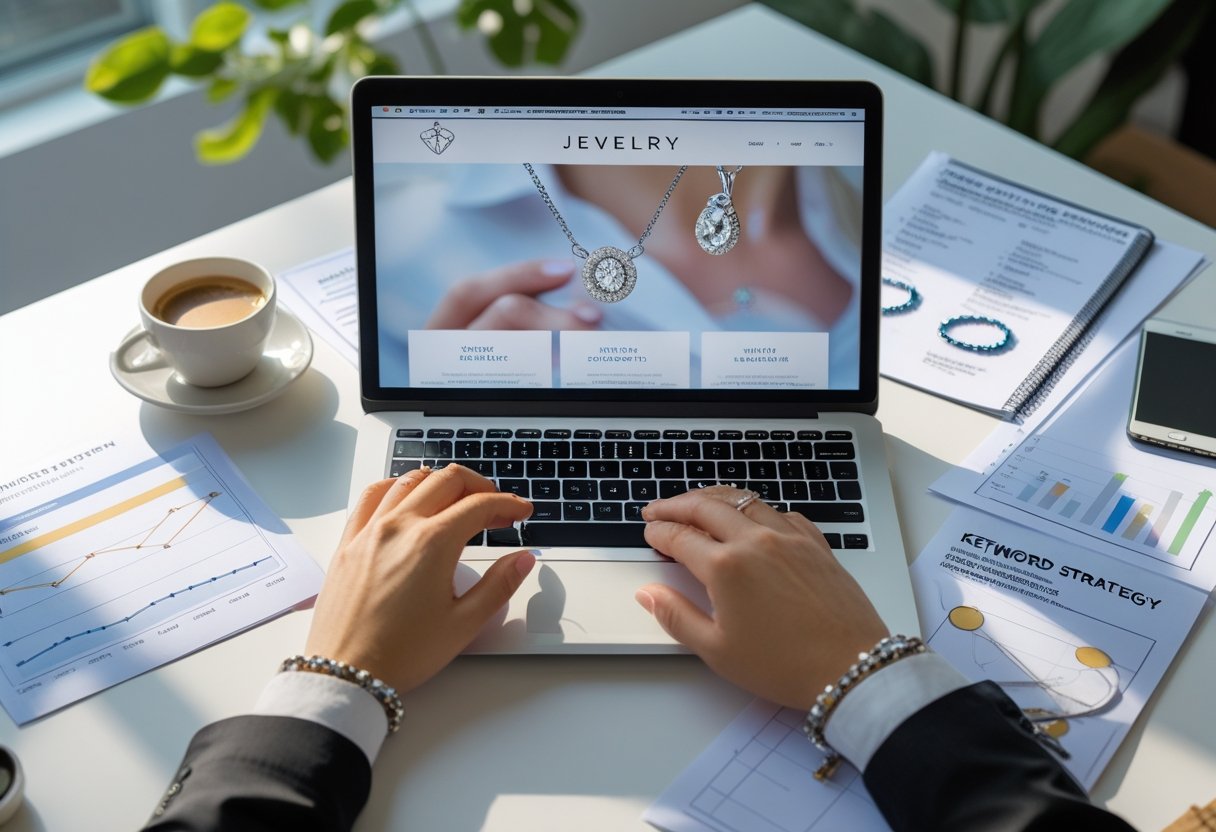
Using specific keyword approaches helps jewelry websites target the right customers. Balancing different keyword types and understanding search intent boosts visibility and attracts qualified traffic. Examining competitors’ practices offers insights for refining keyword choices.
Long-Tail vs. Short-Tail Keywords in Jewelry
Short-tail keywords are broad and highly searched, like “gold necklace,” but they face heavy competition. Long-tail keywords, such as “14k gold heart pendant necklace,” have lower search volume but higher conversion rates.
Long-tail keywords attract shoppers who know what they want and are closer to purchase decisions. Combining both types helps capture a wide audience and target niche segments effectively.
Jewelry sites should prioritize long-tail keywords in product descriptions and blog content to increase relevance and reduce competition. Short-tail terms work better in category pages and brand awareness efforts.
Identifying Buyer Intent Keywords
Buyer intent keywords indicate where a shopper is in the purchase process. Terms like “buy,” “discount,” or “reviews” signal high intent to purchase. For example, “engagement ring reviews” suggests the customer is researching options.
Including transactional keywords helps attract shoppers ready to make decisions. Informational keywords, such as “how to clean silver jewelry,” engage customers earlier in their journey but require different content approaches.
Keyword selection should match the content’s goal—either to inform, compare, or sell. Tools like Google Analytics and SEMrush assist in analyzing which intent keywords generate the most traffic and conversions.
Analyzing Competitors’ Keyword Tactics
Reviewing competitors’ websites reveals which keywords drive their traffic. Tools like Ahrefs or Moz can show competitors’ ranking keywords and backlink profiles.
Focus on keywords competitors rank for but do not dominate. This uncovers opportunities for targeting overlooked long-tail or buyer-intent keywords.
Tracking competitor keywords regularly helps adjust strategies based on market changes. Combining this with unique product descriptions and promotions improves a website’s search performance in the jewelry niche.
Optimizing Your Jewelry Website with Strategic Keywords
Strategic keyword use can improve visibility and drive targeted traffic. Prioritizing keyword placement, refining product descriptions, and targeting local searches are essential steps for better ranking and attracting relevant shoppers.
On-Page Keyword Placement
Placing keywords in key on-page locations helps search engines understand the website’s focus. Title tags, meta descriptions, and headers (H1, H2) should include primary keywords related to jewelry types or styles.
URLs should also incorporate relevant keywords to enhance readability and SEO. For example, a product page URL like /engagement-rings/diamond-solitaire is more effective than a generic one.
Keyword density needs balance; overloading pages with keywords can harm rankings. Instead, use variations and synonyms naturally throughout the content, maintaining clear and user-friendly language.
Optimizing Product Descriptions and Categories
Product descriptions must be detailed and include specific keywords that reflect the product’s materials, style, and occasion. For example, “14k yellow gold wedding band” is better than a vague description like “gold ring.”
Category pages should target broader keywords related to the group, such as “men’s wedding rings” or “diamond necklaces.” These pages often attract higher-volume searches and help structure the website effectively.
Bullet points, features, and technical details improve both SEO and user experience by offering concise information that includes target keywords.
Leveraging Local SEO for Jewelry Stores
Local SEO targets customers searching for nearby jewelry stores. Including geo-specific keywords like city names or neighborhoods in titles, meta descriptions, and content increases local visibility.
Google My Business profiles are essential for local searches. Accurate business details, operating hours, and customer reviews influence ranking and credibility.
Local backlinks from community websites, wedding planners, or event spaces strengthen the website’s domain authority within the local area, attracting nearby shoppers.
Frequently Asked Questions
Effective keyword use and targeted marketing methods help increase visibility and sales on jewelry websites. Focusing on the right tactics can attract the right audience, improve engagement, and boost overall performance.
What strategies can drive more traffic to a jewelry website?
Search engine optimization (SEO) tailored to jewelry-specific keywords improves organic reach. Utilizing blog content that highlights jewelry trends and care tips also attracts visitors.
Which social media platforms are most effective for jewelry marketing?
Instagram and Pinterest are highly visual platforms ideal for jewelry promotion. Facebook ads also reach a broad audience interested in fashion and accessories.
How can I improve my jewelry website’s conversion rate?
Clear product descriptions, high-quality images, and easy navigation increase buyer confidence. Offering limited-time discounts or free shipping encourages quick purchases.
What are the top advertising methods for online jewelry stores?
Pay-per-click (PPC) ads on Google and social media platforms provide direct targeting options. Collaborations with influencers in the fashion and lifestyle niche also generate interest.
How do I identify the target audience for my jewelry brand?
Analyzing customer demographics and shopping behavior reveals key buyer segments. Reviewing competitor audiences and social media insights helps refine targeting.
What content marketing tips will enhance my jewelry website’s visibility?
Creating tutorials, style guides, and customer testimonials builds trust and engagement. Regularly updating content with keyword-rich articles supports better search rankings.

Guy has been building websites and helping companies online for over 15 years. He has worked in the jewelry industry for close to 30 years now. As the CEO of Jewelry Store Marketers, Guy leads the company to provide excellent services in website design and development, search engine optimization and more.


