


How Optimizing Product Descriptions Can Enhance Your Jewelry Store’s SEO Performance for Increased Visibility and Sales
Optimizing product descriptions plays a crucial role in improving a jewelry store’s SEO performance. By crafting detailed, keyword-rich descriptions, a store can rank higher in search results, attracting more potential customers organically. Clear and specific descriptions help search engines understand the products, increasing visibility and driving targeted traffic.

Well-written product descriptions also enhance the shopping experience by providing customers with relevant and useful information. This not only boosts engagement but also encourages conversions, turning visitors into buyers. The right balance of keywords and customer-focused language makes the descriptions both SEO-friendly and appealing.
Regularly updating and analyzing description performance supports ongoing SEO success. It helps identify what works best, allowing for continuous refinement that keeps the store competitive in search rankings and relevant to customer interests.
Key Takeaways
- Detailed product descriptions improve search engine visibility for jewelry stores.
- Clear descriptions increase customer engagement and conversion rates.
- Monitoring and refining descriptions helps maintain effective SEO performance.
The Role of Product Descriptions in Jewelry Store SEO
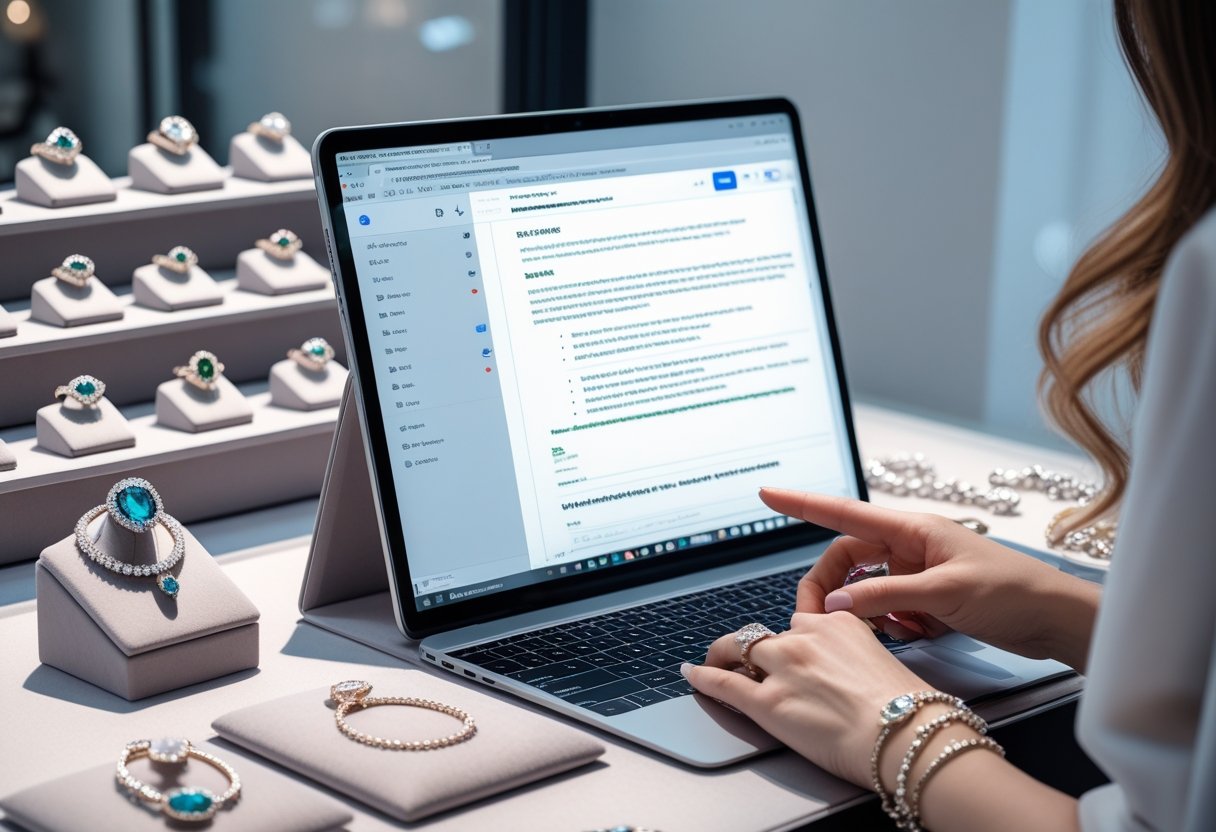
Effective product descriptions target specific keywords, reflect consumer search behavior, and eliminate repetitive content issues. This precise approach helps improve rankings, meet buyer expectations, and maintain site quality.
Influence of Unique Descriptions on Search Rankings
Search engines prioritize content that is original and relevant. Unique product descriptions distinguish listings from competitors and avoid penalties for duplicated text.
Customizing descriptions with clear details about materials, design, and craftsmanship helps incorporate relevant keywords naturally. This increases the likelihood of appearing in search results for targeted queries like “handcrafted gold necklace” or “custom silver ring.”
Moreover, unique content aids in generating rich snippets or featured snippets, enhancing visibility. Stores that reuse manufacturer descriptions risk lower rankings due to content similarity across multiple sites.
Aligning Descriptions With User Intent
Understanding why customers search for specific jewelry guides how descriptions are written. Descriptions must address common purchase factors such as style, occasion, and product features.
For example, a description focusing on “durability for everyday wear” appeals to buyers looking for practical pieces. Keywords should align with how customers describe products in searches, like “affordable engagement ring” or “hypoallergenic earrings.”
This alignment increases the chances of conversions by answering questions or concerns directly, boosting SEO by reducing bounce rates and increasing time on page.
Reducing Duplicate Content Issues
Duplicate content negatively affects SEO by confusing search engines about which page to rank. Jewelry stores often face duplication when product descriptions are copied from suppliers or reused internally.
Avoiding this requires creating original descriptions even for similar items. Using varied vocabulary, highlighting unique features, and combining storytelling with technical details reduces repetition.
Techniques like canonical tags also help signal the preferred version to search engines but unique text remains essential to maximize SEO benefits and improve user experience.
Best Practices for Optimizing Jewelry Product Descriptions

Effective jewelry product descriptions balance keyword use, engaging writing, and clear structure. This approach improves search engine rankings and helps customers quickly understand product features and benefits.
Incorporating Targeted Keywords Effectively
Keywords should be naturally integrated into titles, bullet points, and body text. Use primary keywords like “sterling silver necklace” but also include long-tail variations such as “handcrafted sterling silver necklace with turquoise.”
Avoid keyword stuffing, which can harm SEO and readability. Instead, place keywords where they provide context, like in product benefits or materials.
Research competitor keywords and consider search volume and intent. Tools like Google Keyword Planner can help identify relevant terms that customers actively search for.
Crafting Compelling and Informative Copy
Descriptions must highlight unique features and craftsmanship, such as gemstone origin or metal quality. They should answer common questions about size, care, and style compatibility clearly and concisely.
Use clear, descriptive language without jargon. For example, “This 18-inch gold chain pairs well with both casual and formal wear” informs without ambiguity.
Engaging copy also includes sensory details, like “polished to a high shine” or “delicately textured finish,” which help customers visualize the product.
Structuring Descriptions for Readability
Break text into short paragraphs or bullet points to improve scanning. Use bold or italic formatting to emphasize key info such as size, material, or warranty.
Start with a strong headline or product title that incorporates the main keyword. Follow with benefits and specifications, then care instructions or warranty details.
Clear headings and consistent layout aid both user experience and SEO by signaling important content to search engines.
Enhancing User Experience and Conversion Rates
Optimized product descriptions improve navigation and customer confidence by directly answering questions, creating emotional connections, and combining visuals with text. These elements work together to keep visitors engaged and encourage purchases.
Addressing Customer Questions Through Content
Clear, detailed product descriptions help customers quickly find answers about materials, size, and care instructions. This reduces hesitation and returns.
Including FAQs or bullet points within the description highlights essential information, such as metal type, gemstone clarity, and warranty details.
Well-structured content anticipates concerns, for example:
- Is the ring hypoallergenic?
- What is the exact carat weight?
- How should the jewelry be maintained?
Answering these improves trust and streamlines the buying process.
Using Storytelling and Brand Voice
Storytelling adds personality and makes products memorable. It connects the customer to the piece’s craftsmanship, origins, or design inspiration.
Using a consistent brand voice builds recognition and trust. For example, a luxury store might use refined, elegant language, while a bohemian brand adopts casual, artistic tones.
Descriptions that highlight unique selling points and evoke emotion can differentiate products, encouraging customers to choose one piece over others.
Integrating Visual Elements With Text
Pairing high-quality images with text enhances comprehension and appeal. Close-ups of jewelry details, such as clasp mechanisms or stone cuts, complement descriptions.
Using infographics or size charts alongside text helps shoppers visualize fit and dimensions. This clarity reduces uncertainty and cart abandonment.
Alt text on images also contributes to SEO, ensuring search engines understand the context of visuals, which supports better indexing and search rankings.
Tracking and Refining Description Performance
Measuring the impact of product descriptions helps identify what drives customer interest. Using specific data points and testing different writing approaches supports ongoing improvement.
Analyzing Traffic and Engagement Metrics
Monitoring visitor behavior reveals which descriptions attract clicks and hold attention. Key metrics include page views, average time on page, and bounce rate.
High page views paired with low bounce rates suggest clear, appealing copy. Conversely, short visit durations may indicate descriptions don’t provide enough useful information or fail to engage.
Tracking conversion rates tied to specific products also highlights descriptions that motivate purchases. Tools like Google Analytics or Shopify reports offer detailed insights.
Regularly reviewing these metrics allows adjustments, ensuring descriptions align with customer intent and improve search rankings.
A/B Testing Different Description Styles
A/B testing involves showing two or more versions of a description to different user groups. This method helps isolate which style leads to better performance.
Elements to test include length, keyword placement, tone, and formatting (such as bullet points vs paragraphs).
For example, testing a description focused on material benefits against one emphasizing design details can reveal customer priorities.
Results should be measured by changes in engagement and conversion metrics. Testing over a sufficient timeframe ensures statistical significance.
Applying this data-driven approach supports crafting descriptions that maximize SEO impact and sales potential.
Frequently Asked Questions
Effective product descriptions use targeted keywords, clear meta descriptions, and multimedia to boost SEO. Structured data supports search engine understanding, while user engagement influences ranking. Continuous monitoring helps refine strategies based on performance metrics.
What strategies can be employed to enhance keyword usage in jewelry product descriptions for SEO?
They should conduct keyword research focused on jewelry-specific terms like “engagement rings” or “sterling silver necklaces.” Keywords must be naturally integrated into titles, product features, and benefits without stuffing. Including long-tail keywords related to style, material, and occasion also improves relevance.
In crafting SEO-friendly content, what role do meta descriptions play for jewelry products?
Meta descriptions provide concise summaries under search results. They increase click-through rates by clearly outlining the product offering and unique selling points. Using keywords within meta descriptions helps search engines understand page content.
Can the inclusion of multimedia elements in product listings impact SEO for an online jewelry store?
Yes. High-quality images, videos, and 360-degree views improve user experience and engagement metrics, which search engines consider in rankings. Properly optimized alt text on images further supports keyword relevance.
What are the best practices for utilizing structured data to improve jewelry item visibility in search engine results?
Implement schema markup specific to products, such as “Product” and “Offer” schemas. This provides detailed information like price, availability, and reviews directly in search results. Accurate structured data improves click-through rates and can generate rich snippets.
How can user engagement be factored into SEO when writing descriptions for jewelry pieces?
Descriptions should encourage interaction by highlighting benefits and prompting reviews or questions. Engaged users tend to stay longer on product pages, reducing bounce rates. Search engines use these signals to determine content value.
What techniques should be used to monitor and measure the effectiveness of SEO in product descriptions over time?
They can track organic traffic, bounce rates, and conversion rates using tools like Google Analytics and Google Search Console. Monitoring keyword rankings and click-through rates provides insight into SEO performance and helps identify areas for improvement.


